Parent guide
Grounding exercises for kids when worry takes over
Updated 23 August 2026
Grounding exercises pull a child's attention back to the present when their mind is racing ahead or their body feels buzzy and unreal. They work well for school-age kids who can't sit still for a long meditation.
Use them when breathing alone isn't landing, or when worry shows up as "I feel weird" rather than "I can't breathe." Here are three you can teach at the kitchen table, plus how CalmBud's Grounding activity fits in.
What grounding does (and doesn't do)
Grounding is not distraction in the "pretend it's fine" sense. It's a short reset: notice something real in the room, in the body, or through the senses. The goal is to get the nervous system out of future-tripping long enough to choose a next step.
It won't erase a hard day. It buys you thirty seconds to a few minutes of enough calm to talk, eat, or get to the car.
5-4-3-2-1 senses (ages 7+)
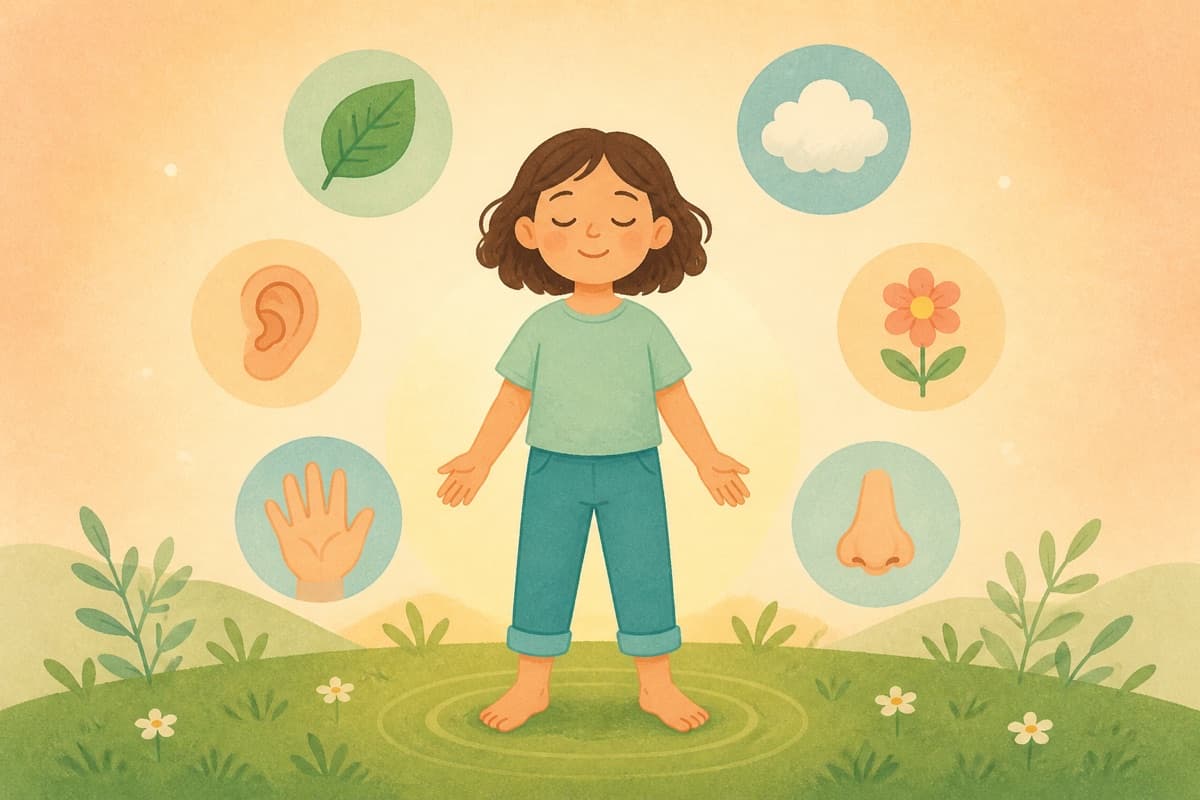
Name five things they can see, four they can touch, three they can hear, two they can smell, one they can taste. Go slowly. If counting is too much mid-storm, drop to three things they can see and two they can touch.
Works in shops, in the car (adapt: three sounds, two things they feel on the seat), and at bedtime when the dark makes everything feel bigger.
Feet on the floor (ages 6+)
Bare feet or shoes, press down and notice the floor holding them up. "Push your feet like you're trying to grow roots." Pair with one slow out-breath if they'll do it.
Good for kids who say breathing "makes it worse" because they're focusing on chest tightness. Feet and legs feel safer territory.
Colour hunt (ages 6+)
Pick a colour and find five objects in the room. Then pick another. Silly and fast enough for a wiggly six-year-old, still pulls eyes and brain into the here-and-now.
CalmBud's Grounding activity walks through similar steps with pictures so you're not improvising every time.
Grounding vs breathing: which first?
If they're hyperventilating or focused on body symptoms, try grounding first. If they're angry but still, breathing with a visual often works. Many kids use both in one session.
CalmBud is a wellbeing tool, not therapy or medical care. If your child has ongoing anxiety, panic or sleep problems, talk to your GP or a clinician.
Common questions
Can grounding make dissociation worse?
Stop if they panic more when noticing their body. Switch to external senses only (colours, sounds) and mention it to a clinician if it keeps happening.
How long should a grounding exercise take?
One to three minutes. Longer isn't better if they're already overloaded.
Keep reading

How to help a child calm down from big feelings
A simple order of operations when your kid is melting down: safety first, then the body, then words. Plus a calm-down corner that isn't a timeout.

Breathing exercises for kids with anxiety
Simple breathing exercises that help anxious kids calm down, including belly breathing, longer exhales, and how to practise when they are not already upset.