Parent guide
Breathing exercises for kids with anxiety
Updated 23 August 2026
Telling an anxious child to "just calm down" almost never works. Their heart is already racing, their breathing is shallow, and their thoughts are bouncing. A short breathing exercise gives their body something to do besides spiral.
Here are a few techniques that work well for kids aged 6 to 13, how to teach them before a meltdown, and how CalmBud uses pictures so they don't have to remember a count.
Why breathing helps
Slow breathing is one of the few tools a child can use anywhere: classroom, car, bedtime. Making the out-breath a bit longer helps their body come down from fight-or-flight. You won't get a dramatic switch. You'll usually see the shoulders drop and they start talking again.
Don't wait until they're already in a state to teach it. Do 60 seconds on a boring Tuesday. Then it's there on a hard Thursday.
Belly breathing (ages 6+)
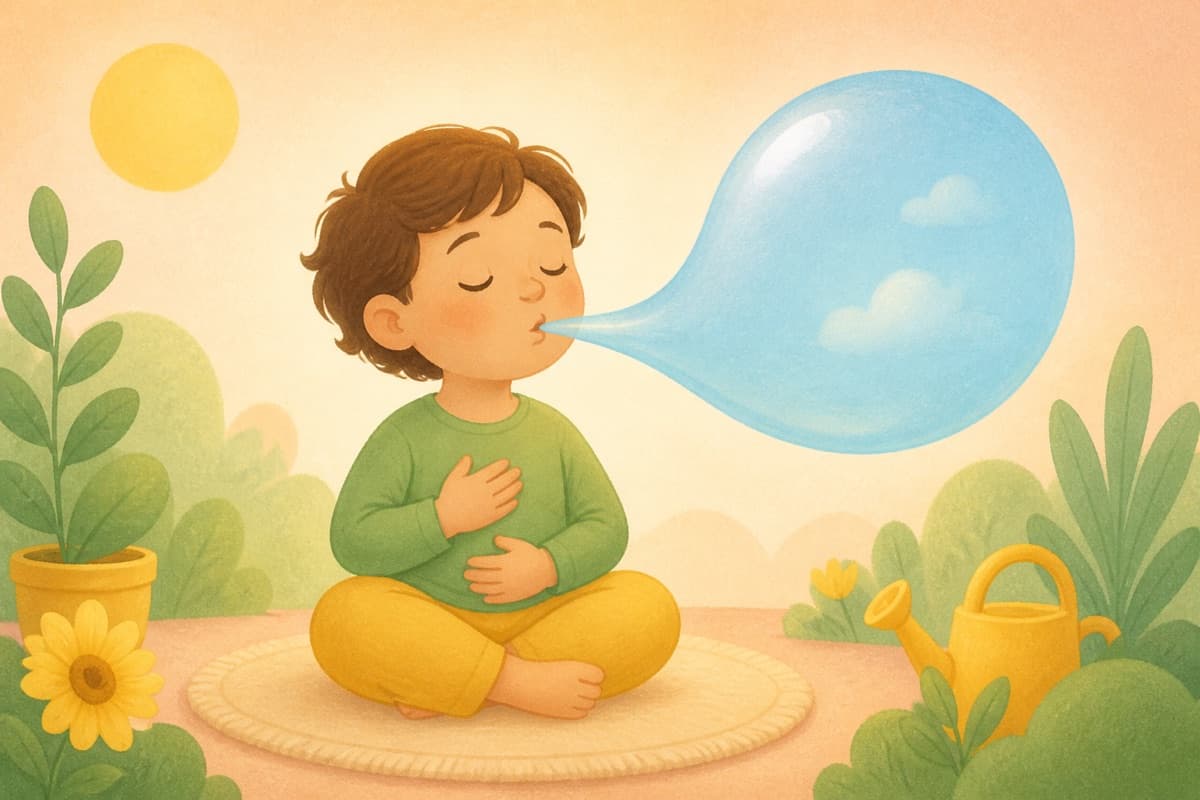
Have them lie down or sit with a hand on their tummy. Breathe in through the nose so the hand rises, then out through the mouth so it falls. Four in, four out, for about a minute.
If counting is too much, skip it. "Smell the flower, blow the bubbles" is plenty. You just want the tummy moving. The rhythm does not have to be perfect.
Longer exhales when worry is spiking
If they're already wound up, make the out-breath longer than the in-breath. In for three, out for five. Repeat five times. If they feel dizzy, stop and breathe normally. That usually means they're trying too hard, not that they've done it wrong.
Make it visual
A lot of anxious kids can't follow audio instructions while they're upset. They need something to look at. A circle that grows and shrinks, a character that breathes with them, or tracing a square on the table with a finger all work.
CalmBud's Magic Breathing is built around that. They follow a picture, not a lecture. Use it when they'll still look at a screen, and keep a no-screen backup (finger tracing, hand on tummy) for school.
When breathing is the wrong tool
CalmBud is a wellbeing tool, not therapy or medical care. If your child has ongoing anxiety, panic or sleep problems, talk to your GP or a clinician.
Skip the breathing if they're hyperventilating, having an asthma attack, or so distressed they can't follow a one-step instruction. Sit with them, turn the noise down, and wait. Teach the exercise later.
Common questions
How long should a child practise breathing?
Sixty to ninety seconds is plenty. A short bit every day beats a ten-minute session they'll refuse.
What if my child says breathing is boring?
Do it with them, or pair it with something they already like, like a sticker or a character. Breathing they can watch usually goes down better than a spoken script.
Keep reading

How to help a child calm down from big feelings
A simple order of operations when your kid is melting down: safety first, then the body, then words. Plus a calm-down corner that isn't a timeout.

Emotional regulation for kids: skills that actually stick
What emotional regulation actually means for kids aged 6 to 13, the skills worth practising at home, and how a mindfulness app can help without replacing you.